The School of Chemo #1: You're on a beach (not)
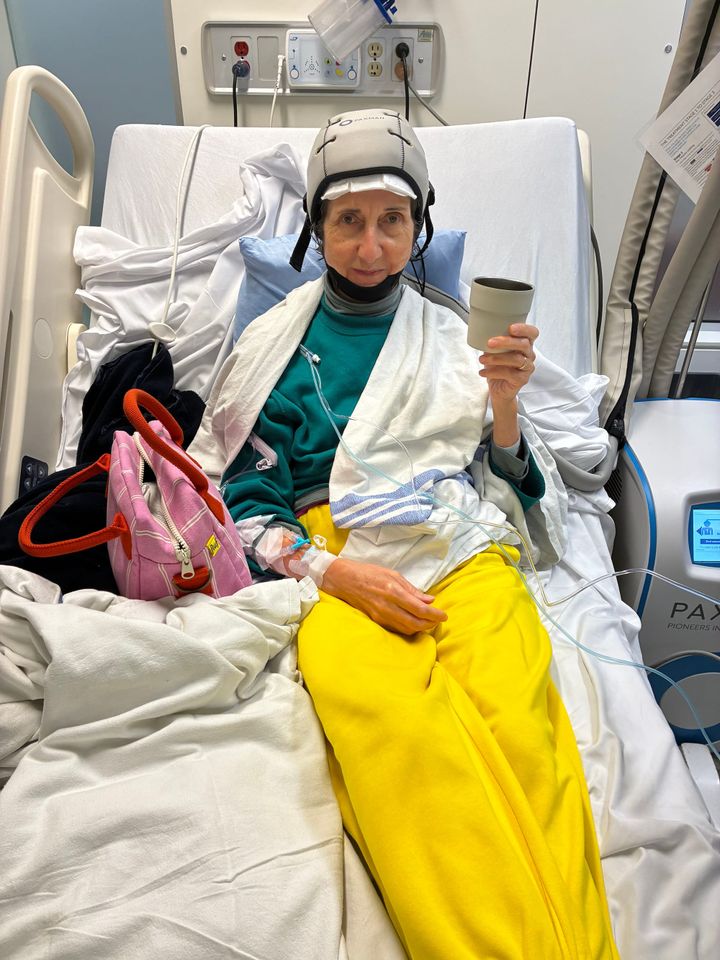
The phrase “the school of chemo” occurred to me in a kitchen store in September when I was looking for lunchbox paraphernalia. The shelves had been picked over, but I scored the last banana-preserver (how did ever I live without one?) and a container slender enough to lock your sandwich in place so it doesn’t fall apart if you pack it sideways in your bag. And of course, the gorgeous pink lunch-bag itself, which honestly I didn’t need, but it went with my chemo outfit, and a pink anything can introduce an element of joy where you thought there was none to be had.
I thought back to Septembers not-so-long ago when, as a PhD student, I was poised at the start of a hectic term. I’d think wistfully: This is my last weekend of slow reading ... my last alarm-free morning ... the last dinner when I don’t have to gulp down soup and rush immediately to my desk …
It crossed my mind that my (blessedly short and mild) chemotherapy treatment would take the equivalent of one school term. It would be like the first few years of my PhD, when I juggled course work and research with freelance jobs and TA responsibilities. Don’t get me wrong, I’d take 150 undergraduate essays over this any day of the week, but – just like in school – I was anticipating a monastic existence for a few months. Also, I’d be monitored and measured on a regular basis, and would feel increasingly crappy. And when it was over, I’d probably be too drained to enjoy much relief.
Thinking of chemotherapy this way helped. For one thing, I got through those terms more or less in one piece. Also, I thought: I’ll learn things from this, too. Eventually I might be too overwhelmed to learn much, or at least articulate it, but for now, I’m ready with notebook (and lunchbox) in hand.
Lesson One was inspired by a phrase I hear a lot these days: “You’re on a beach.”
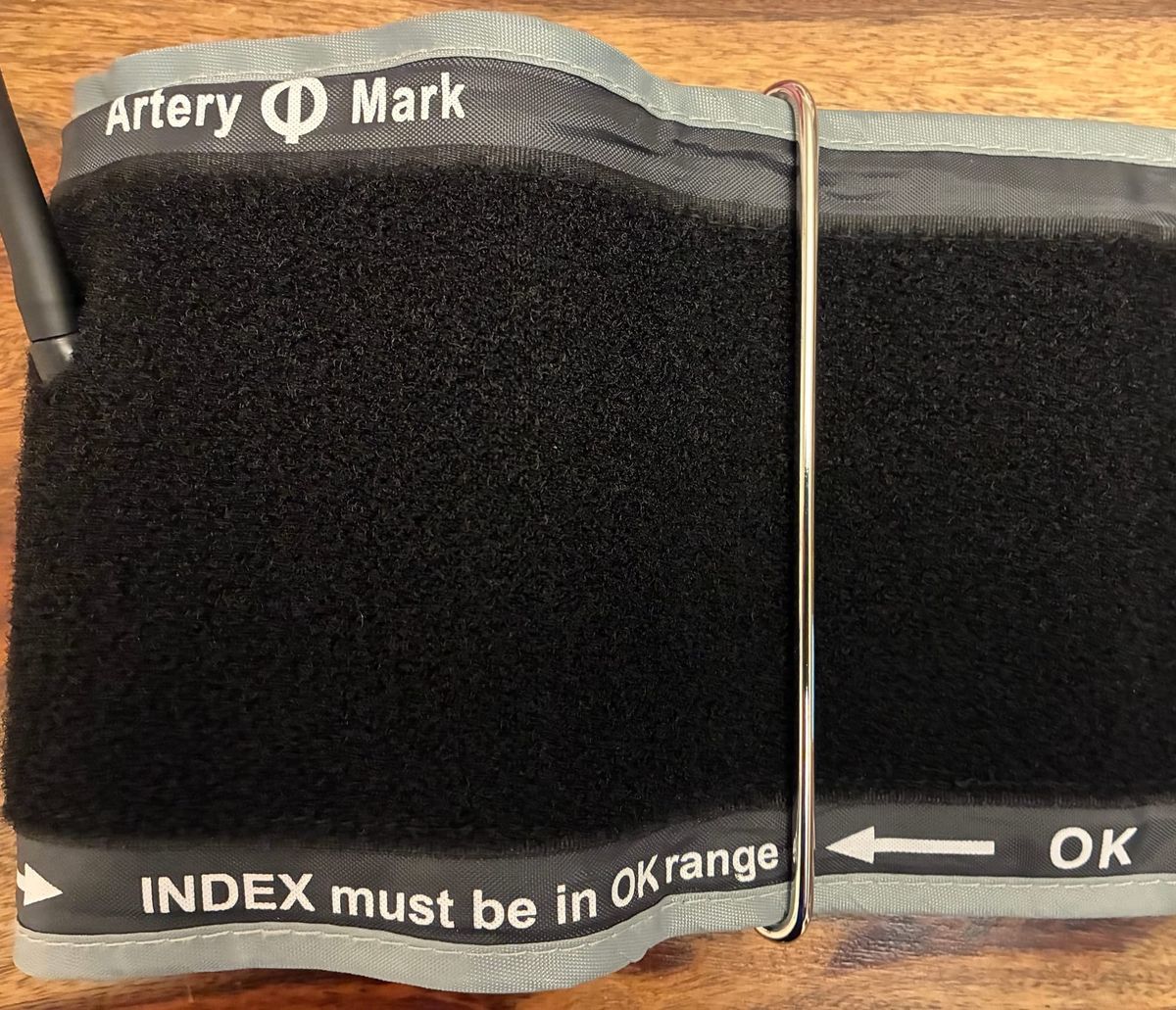
Generally, I hear it sitting in a bustling hospital ward, with lots of other patients in chemo chairs around me, all of us looking drained and exhausted in the fluorescent light, attached to machines which randomly beep in a way that convinces my nervous system this is the perfect time for me to jump out of my skin. Just at that moment, a nurse will say: “You’re on a beach,” as they slip a blood pressure cuff on my arm. It’s a signal to put myself in a calm state, and – surprise, surprise – it never works. And that makes me feel terrible. It’s a bizarre form of performance anxiety.
It seems that as a Feldenkrais practitioner, I should have a prodigious ability to control my body’s inner processes, especially since such a large portion of my practice is devoted to breathing. I actually can't control my blood pressure by breathing, or imagining myself anywhere. I come from a long line of hypertensives and I joined their ranks right on schedule. But my practice does give me the ability to observe the whole event lucidly, and ask questions.
Such as – what comes first? Does high blood pressure sometimes give the brain the idea that something’s wrong and thus, produce anxiety? That’s what I believe has been happening to me. If that's true, “You’re on a beach” sounds like another version of: “You’re a hysterical woman,” even if the opposite is meant.
After a huge blood pressure surge caused me to miss one treatment, I arrived for the next one with levels just about as high.
“You’re on a beach …”
Oh no I’m not! Anyway, if you want me to really freak out leave me on a beach with nothing to do. Couldn’t you at least say: “You’re on the 10th floor of Robarts Library”?
But I knew I needed to get through this. And I knew breathing wasn’t going to work. I took an Ativan, overriding whatever inner process the nurse was suggesting when she invited me on that beach vacation. My pressure didn’t go down, but it didn’t go up, either, and that was all I needed. The following week, I navigated the whole thing fine. By that time, the blood pressure medication I’d been asking for since the summer had kicked in. I had my husband by my side, a cup of chamomile tea in hand, and an episode of Downton Abbey on my Ipad. Then I took some deep breaths.
My regular breathing practice did me lots of good, I'm sure. For one thing, I had zero desire for a tranquilizer the following week. I'm too interested in life to zonk myself out unless I really need to, but the whole experience has made me think about what a mistake it can be to instrumentalize some of the breathing patterns that I explore on my own and facilitate in my classes. Breathing is breathing. A pill is a pill. Taking a pill feels transactional to me. I "pay" with a pill, and my body performs the desired “service.” Both are important, but you can’t expect of one what the other is designed to give.
In the area where I often receive my chemo, there’s a waiting room with a big screen. It doesn’t show news. Instead, it shows public service announcements for cancer patients and their loved ones, including the prodigious services that Princess Margaret Hospital offers. I appreciate the information about music therapy, counselling, the prayer room, about diet and exercise, and supports for caregivers. Even if I don't avail myself of a lot of the services, it's reassuring to know I'm in a place that takes a holistic attitude, recognizing that cancer affects every single part of a person’s life, and every single person who cares about them. The thoughtfulness that goes into it goes a long way to counterbalancing just how hard the whole experience is.
The screen also shows tips for staying calm, including an animation of a blue ball with text telling you to inhale when it gets bigger, hold, exhale while it gets smaller, hold, etc. Given the amount of attention given to breathing in my classes, what I’m about to say might seem like a bad career move but I have done “box breathing,” as it’s often called, while measuring my own blood pressure. If my system feels stressed and hectic, and I go right into the four-part pattern without preparation, my pressure goes up. Breathing simply refuses to act as currency.
Then there's the question of why anyone would be urged to do a calming breath pattern in the first place. Cancer offers lots of reasons, but to me at least, there's an important caveat. Recently I found myself biting the head off an earnest resident when she asked me if I needed psychosocial support for my anxiety. “So far, every time I’ve been anxious it’s been warranted,” I snapped. (It was warranted at that appointment, too, though the issue was quickly resolved.)
I thought about it for a long time afterwards. I'm still haunted by memories of the spring and summer, when I was desperately trying to get medical attention, knowing something was gravely wrong. It was a confusing time, but it wasn't hard to parse out what part of my anxiety had to do with an impending cancer diagnosis, and what part could be laid at the feet of a badly overtaxed medical system. There were long waits, poor communication, and machines were being expected to do the work of people. I needed to listen to my anxiety and act on it. Don’t get me wrong – I’m happy to have breathing even mentioned in a hospital setting, but it should no more be used to cover up real issues than a pill should.
I’ve breathed my way through a lot of unpleasant procedures in the last while. It certainly helps me stay still in moments when the integrity of my chest wall depends on it. Breathing will take the edge off the stress, but for what amounts to minor surgery when you’re wide awake, and holding an awkward/painful position, it’s just not enough. At least not for me. (Aside … the whole question of diagnostic procedures deserves its own post. I think sedation should be available – and encouraged – for some of them, just as women have recently started getting sedation for the insertion of IUDs.)
To put it another way: breathing doesn’t have the side effects that pills have, so it's great if it can be used instead of drugs, but no matter what the "prescription," patients need to be heard and believed.
And there need to be enough resources to make that possible.

Comments ()